

Herbivorous Dinosaur Seeking Connection
Tim Freeman has worked at RSRT since 2013 — long enough, he'll admit, to be a dinosaur. But this herbivore has convictions, and he's looking for families ready to take action.
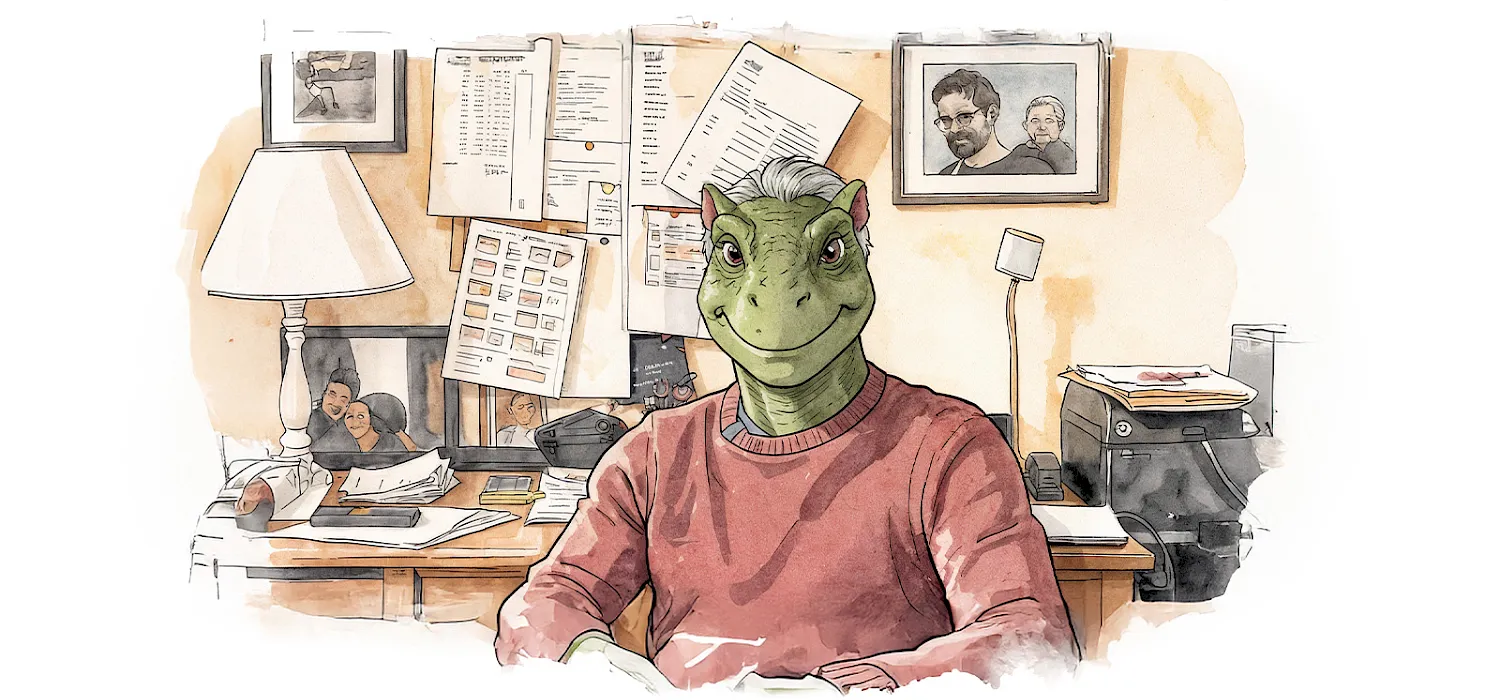
My daughter, Eleanor, was diagnosed with Rett syndrome when she was two-and-a-half years old. I was 43. Eleanor is now almost 17. I'll let you do the math on my age. I'm not quite a dinosaur, I think.
When I started my job as chief development officer at RSRT in 2013, Facebook dominated social media, AI was largely unheard of, and emailing or calling someone on the phone was the preferred way to communicate. A lot has changed, I know. And I confess that email and phone remain the way I do most of my communicating. Okay, maybe I'm a dinosaur.
One thing hasn't changed for me, though.
In 2013 I believed that the genetic-based research that RSRT is pushing forward will change Eleanor's life and hundreds of thousands of other lives. Today, I believe that more than ever. It's more than a belief. It's a conviction.
That conviction is based on what I see every day — the dedication, passion, expertise, energy, and wisdom of Monica and our RSRT science team in action for all with Rett syndrome. I'm on the fundraising and administrative side of RSRT, so I can humbly toot our science team's horn. My conviction is also based on the results. When I started at RSRT, gene therapy was just a concept for Rett syndrome. Enter RSRT's Gene Therapy Consortium — and fast forward to today with multiple gene therapy clinical trials underway. Imagine where else we can go with continued progress and sufficient funding.
I'm not pollyannish about a cure. I know that research progress takes time. I know that breakthroughs still need to happen to translate other genetic approaches that RSRT is championing into clinical trials. I know that gene therapy will likely need tweaking and improving. I know that RSRT's science team has to continue to connect the right scientists with the right biotech leaders to ensure that more clinical trials are launched. There's a ton of work ahead.
I also know that advancing us to cures takes major financial resources. Here's where this dinosaur comes in.
My role at RSRT is to encourage and support Rett families in fundraising for the research. The fact is we cannot advance toward genetic-based, potentially curative medicines without more families — parents, caregivers, grandparents, aunts and uncles, everyone — getting involved. Families taking action is the only way that funds come in to RSRT.
Anything you do for RSRT's fundraising will be "right." We need small events, big events, and everything in-between. We need crowdfunders, letter and email-writers, social media campaigners. It doesn't matter what you do. It matters that you take action and do it.
That's why I'm appealing to you to contact me to get started. I may be a dinosaur. But I'm a friendly one — herbivore, I promise — and one who shares your passion for changing our loved ones' lives in a way that only advancing science can.
Call or email me. Roar.